


OBJECTIVES
With PB001, Pure Biologics aims to develop a recombinant bispecific monoclonal antibody as a therapeutic candidate for use in immunotherapy of colorectal cancer. The antibody will simultaneously target cytotoxic lymphocytes and also a tumor cell surface antigen. Key aspects of the project include the selected targets and their differential expression in a tumor disease state. This highlights a novel and previously unexplored mechanism of action, via simultaneous engagement and activation of cytotoxic lymphocytes.
DESCRIPTION
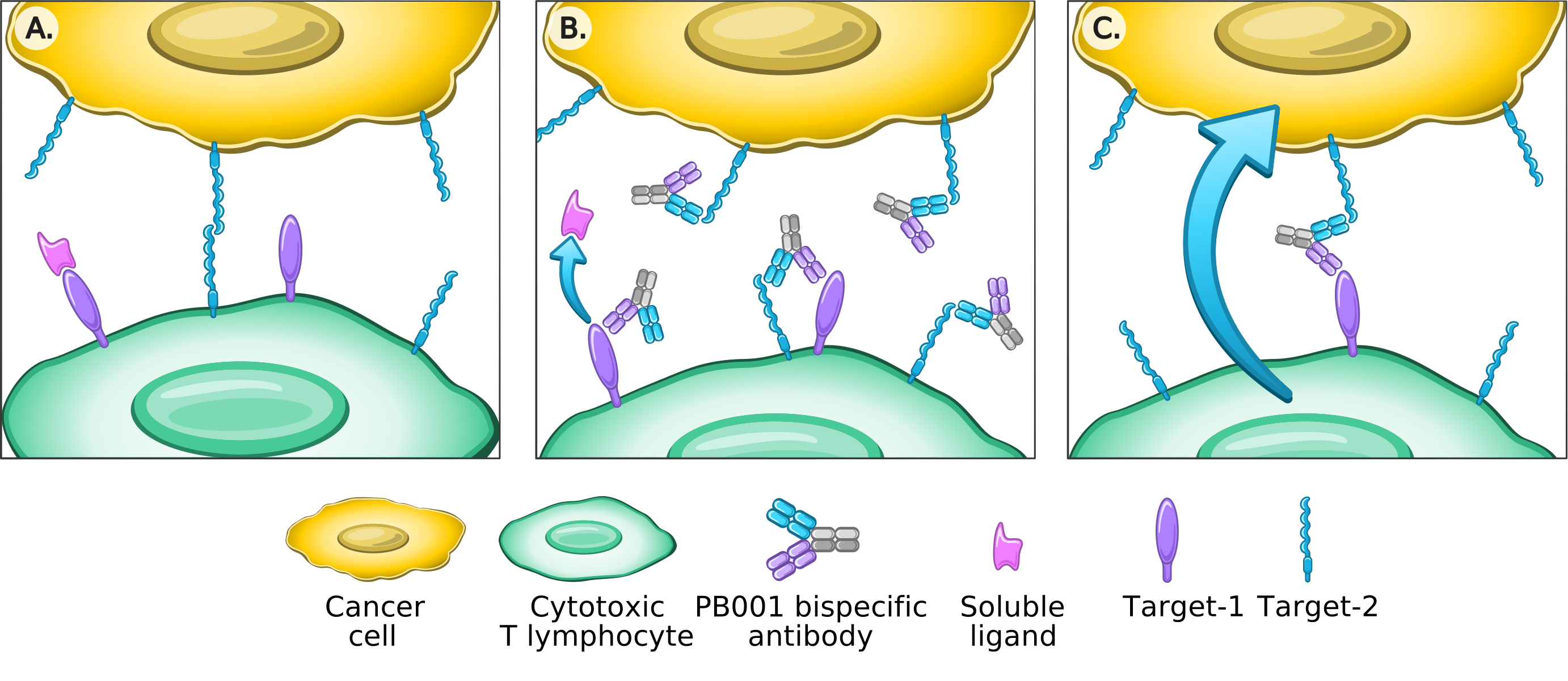
Therapies focusing on immune checkpoint inhibition offer attractive targets for novel drug development. Our Company has identified two promising targets, one which is overexpressed in colorectal cancer, with limited expression in healthy cells, and another found in a subpopulation of T lymphocytes – immune defense cells. The goal of our intended drug molecule will be to activate immune cells which are otherwise not effectively engaged in fighting the tumor.
To elicit an immune response against the cancer, two conditions must be met: recognition of tumor cells by T lymphocytes, and activation of those lymphocytes. Various receptors and ligands regulate pathways through which T lymphocytes are engaged, either through their stimulation and/or their inhibition. These molecules are known as immune checkpoints and their regulation is one of the most promising future therapies.
We hypothesize that our new first-in-class bispecific antibody will synergistically drive a bridging, or engagement of factors, that:
– reverse T-cell exhaustion and activate lymphocytes in the tumor microenvironment,
– direct leukocytes (lymphoid or myeloid) to attack tumor cells.
To test these hypotheses, a series of in vitro experiments will be performed to characterize the biological mechanisms of action in cell culture.
Upon successfully demonstrating efficacy using in vitro test systems, in vivo studies will be performed that examine toxicological profiles, therapeutic doses and efficacy of bispecific antibodies in humanized mice expressing the selected targets. Looking ahead, the drug candidate is then expected to enter a first-in-human clinical trial in patients.
PROJECT PROGRESS
Pure Biologics is currently preparing functional tests on drug candidate molecules. These tests will measure immune responses resulting from immune cells and cancer cells treated with antibodies. Anticipated results will include activation of lymphocytes (cells responsible for the induction of immunity), and steering the resulting immune responses towards destruction of a tumor cell. We also initiated the first in vivo pre-clinical study in mice, to validate the assumed mechanism of action of the bispecific molecule. Research is conducted in mice with a human immune system. The study investigates the possible toxicity of the model antibody and its influence on the viability and tumorigenic processes in mice.
PROJECT DATA SHEET
Title: Development of the bispecific antibody for the immunotherapy
Program: Smart Growth Operational Programme 2014-2020
Value: PLN 32 037 380,00
Contribution of European Funds: PLN 23 988 056,00
Start: 2nd February 2018
End: 31st December 2023
